 TZS
 KES - Kenya
 UGX - Uganda
 RWF - Rwanda
 NGN - Nigeria
 ZAR - South Africa
 USD - Zimbabwe
 GHS - Ghana
 ETB - Ethiopia
 ZMW - Zambia
 USD - International

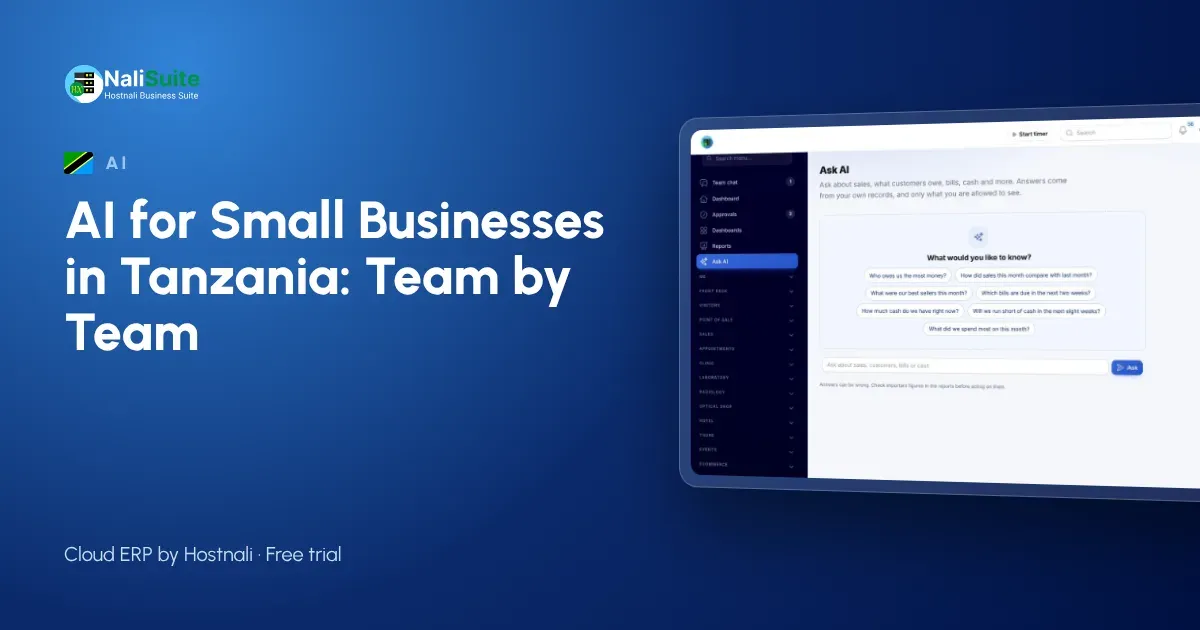
A small Tanzanian business is usually three teams in one, even if each team is a single person: someone keeps the accounts, someone runs the business, and someone looks after customers. AI fits each of them differently.
This guide goes team by team, with a running example from an electronics shop in Dar es Salaam, then covers data protection and cost.
The example business
Juma runs an electronics and accessories shop in Kariakoo with a second branch in Mwenge. He has nine staff, buys from about forty suppliers, sells to walk-in customers and to small resellers on credit, and takes payments by M-Pesa, Airtel Money, card and cash. His accounts clerk, Neema, works three days a week.
Accounts: let AI do the typing
Neema’s least favourite job is entering supplier invoices. Some arrive as PDFs, others as paper receipts from the market. Document AI takes over the typing: she uploads the PDF or photographs the receipt, and it reads the supplier, invoice number, dates, lines, VAT and totals. It matches the supplier by TIN or name, or adds a new one.
Neema checks what was read. Then she saves a supplier invoice as a draft bill, or a receipt already paid as an expense. On her three days, she now spends her time reconciling M-Pesa and bank payments against invoices rather than typing.
What AI does not do here: decide how something is recorded, deal with TRA, or replace the accountant who prepares the returns.
Management: answers instead of reports
Juma wants to know three things most weeks: who owes him money, what is selling, and whether cash will be tight. Before, he waited for Neema’s spreadsheet.
With the AI business assistant, he asks in plain words:
- “Which resellers owe us the most?”
- “Which products sold best at Mwenge last month?”
- “Will we run short of cash next month?”
The assistant answers from the live sales, invoices, bills and books. For the cash question there is also a cash-flow forecast showing money in and out week by week, with a summary in plain words. Juma reads it on Monday before ordering stock. When a large shipment is due from a supplier in the same week as salaries, he can see the squeeze early and agree a later payment date or a smaller order, instead of discovering the gap when he opens the bank app.
Answers respect roles: each person only gets answers from what their role allows them to see. The Mwenge supervisor can use it too, without seeing the company’s full figures.
Customer service: drafts, not autopilot
Resellers and customers ask the same questions again and again: is this model in stock, when will my order arrive, did my payment go through? Juma’s team handles them as tickets in the Helpdesk app. The assistant drafts a reply on each ticket, and the staff member edits and sends it.
The staff member remains responsible for what goes out. That matters for a business whose reputation depends on resellers trusting what they are told.
Everyday writing, carefully
Outside NaliSuite, general AI tools help with writing tasks: a first draft of a product listing, a short notice about new opening hours, an email to a supplier. If you write in Kiswahili and English, try both and see which drafts need fewer corrections. Read and correct everything, and keep customer and staff personal data out of tools you have not checked.
The Personal Data Protection Act, 2022
Tanzania’s Personal Data Protection Act, 2022, overseen by the Personal Data Protection Commission, applies to the personal data in your business records. Before using AI with them, decide what you are using it for, limit who can use it, and understand where requests are sent.
NaliSuite’s AI add-ons use your own Anthropic API key, under your own account and its terms, and NaliSuite sends only what each request needs.
The cost
Each AI add-on is a NaliSuite marketplace add-on to any plan. The AI usage itself is billed by Anthropic to your own key, so Juma sees it in his own Anthropic account. He started with Document AI alone and added the assistant after a month, once he could see the time Neema saved. He reviews the usage in his Anthropic account at the end of each month, alongside the shop’s other running costs.
Where to begin
Start with clean records in accounting, then choose the team that loses the most time and give AI that job first. The AI in NaliSuite page shows how the add-ons fit together.
Keep the human check
In every team, the same rule applies: AI prepares, people confirm. Neema checks every bill, Juma checks figures that drive a decision, and staff edit every reply. That rule is what lets a small business move faster without losing control of its records.
Frequently asked questions
Can it read receipts photographed on a phone?
Yes. Document AI reads photos of till receipts as well as supplier invoices in PDF.
Will it reply to customers without staff?
No. It drafts replies on helpdesk tickets for your staff to edit and send.
Who pays for the AI usage?
Anthropic bills the usage to your own API key; the add-on itself is a NaliSuite marketplace add-on.
Try NaliSuite
Try NaliSuite free, then from TZS 5,500 a month, with the AI add-ons on any plan. See the plans.