 TZS
 KES - Kenya
 UGX - Uganda
 RWF - Rwanda
 NGN - Nigeria
 ZAR - South Africa
 USD - Zimbabwe
 GHS - Ghana
 ETB - Ethiopia
 ZMW - Zambia
 USD - International

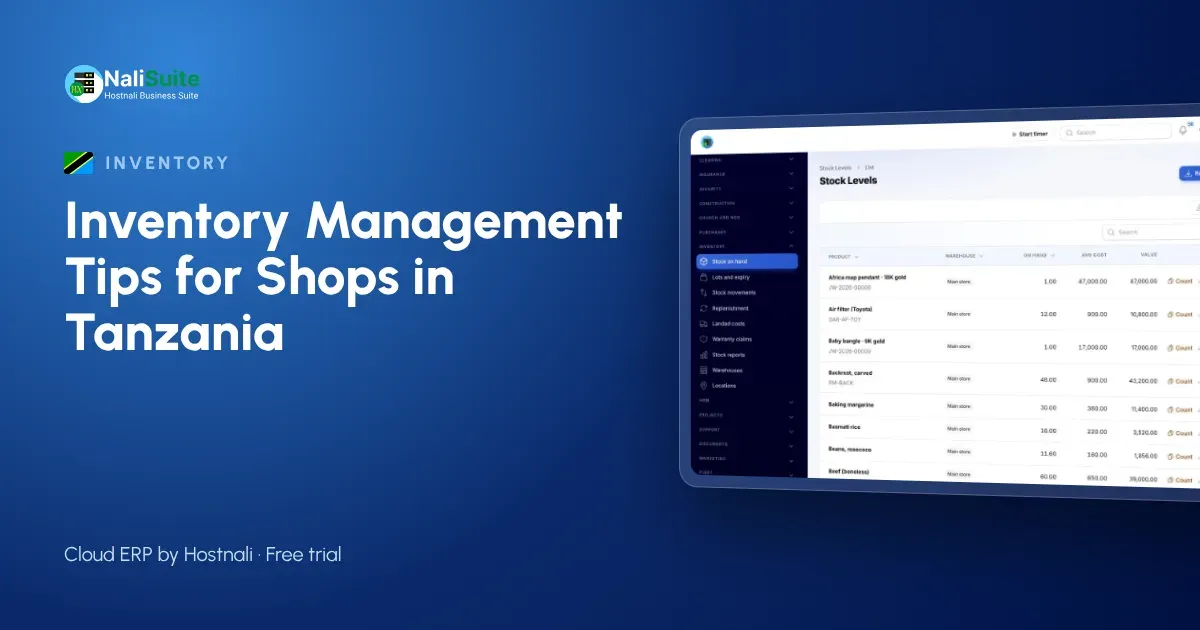
From Kariakoo to Arusha’s markets, Tanzanian traders know that stock is cash in another form. Too little and you lose sales; too much and your money is stuck. These tips will help shops, distributors and pharmacies keep a tighter grip on inventory.
Don’t let stock expire on the shelf
Pharmacies, agro-dealers, food and cosmetics businesses all sell products that expire. Record the batch (lot) number and expiry date of every delivery, sell the oldest first, and check a report of stock expiring in the next 60 or 90 days every month.
Batch tracking also helps when a supplier recalls a product: you can see in seconds whether you have that batch and where it went.
Stock control in Tanzania
Many businesses restock from Kariakoo or from distributors in Dar es Salaam, then move goods upcountry to Dodoma, Mwanza or Mbeya. Each leg of the journey is a chance for errors.
Distributors sell to shops on credit, pharmacies track expiry dates, and almost everyone takes M-Pesa or Airtel Money alongside cash. When sales and stock live in different places, the numbers never quite agree.
Find and reduce shrinkage
Shrinkage is the gap between what your records say and what is on the shelf. Some of it is theft, but much is simple error: deliveries not checked, sales not recorded, damaged goods not written off.
Check every delivery against the purchase order before you accept it, record damaged and expired goods as write-offs, and compare counts with records weekly. When the till and stock are one system, a gap stands out quickly instead of hiding until year-end.
Example: a distributor in Mwanza
A household goods distributor in Mwanza receives stock from Dar es Salaam by truck every two weeks. Because the lead time is long, reorder points are set to cover at least three weeks of sales. Each delivery is checked against the purchase order, and shortages are noted on the supplier’s bill before it is paid.
Shops buying on credit see their balance on every statement, and the distributor’s stock and receivables are always in step.
Several shops or warehouses
Running two shops from one stock list is how goods go missing. Instead, treat each shop, warehouse or even a delivery van as a separate location. Transfers between them are recorded like any other movement, and each branch’s reports show its own stock and sales.
Head office still sees the total, so purchasing decisions are based on the whole business.
Mistakes Tanzanian businesses can avoid
- Reorder points without lead time. Goods from Dar es Salaam to Mwanza or Mbeya take time; plan for it.
- Paying suppliers before checking deliveries. Compare the delivery with the purchase order first.
- Credit sales on paper. Record them in the system so stock and balances stay accurate.
- No regular counts. Small weekly counts beat one big count that closes the shop.
Know what is not selling
Every business has lines that looked like a good idea and now gather dust. A monthly report of items with little or no movement shows them clearly. Clear them with a promotion, bundle them, or return them if your supplier allows, and remove them from future orders.
The cash you free up is often enough to stock more of your best sellers.
Getting started in Tanzania
List your products with cost price, selling price and barcode, import them and count once to set opening stock in each location.
Set reorder points that cover the full delivery time from Dar es Salaam or abroad. Use purchase orders and check every delivery against them before you pay. Record batches and expiry dates for medicines and food.
If you sell to shops on credit, record each delivery on their account. When they pay by M-Pesa or bank, the payment is matched to the invoice and the balance updates.
Frequently asked questions
Should I count all my stock at once?
Do a full count once or twice a year, and count your fastest-moving and most valuable items more often in small sections. Small, regular counts catch problems early.
Can I see stock on my phone?
Yes. NaliSuite runs in the browser on any phone, so you can check stock levels and reorder lists from anywhere.
How does the till affect stock?
Every sale through the point of sale reduces stock in that shop automatically, so you do not have to update stock by hand.
Try NaliSuite
Every NaliSuite plan, from TZS 5,500 a month, includes inventory, purchases and an offline till, so stock and sales are always in one place. Try it free.