 TZS
 KES - Kenya
 UGX - Uganda
 RWF - Rwanda
 NGN - Nigeria
 ZAR - South Africa
 USD - Zimbabwe
 GHS - Ghana
 ETB - Ethiopia
 ZMW - Zambia
 USD - International

A spare parts shop in Arusha or a wholesaler in Mwanza lives or dies by what it buys and at what price. Yet many Tanzanian SMEs still order by phone and pay by memory, which is how duplicate orders and overcharges slip through.
This guide sets out a simple purchase order process for small and medium businesses in Tanzania.
A day in the life of a spare parts shop in Arusha
Picture an example auto spare parts shop in Arusha that buys from importers in Dar es Salaam. A customer asks for brake pads that are out of stock, so a salesperson phones an importer. The next day another salesperson, not knowing, orders the same pads from a different importer.
With a purchase order process, every order starts as a request, the owner approves it after checking stock, and only one PO goes out. When the parts arrive by bus from Dar es Salaam, the storekeeper checks them against the PO. The importer’s bill is matched before it is paid by bank transfer or M-Pesa.
Why buying without POs costs money
Buying is where a business commits cash before it sees a return. If that step is loose, you find out at month end, when the money is already gone and the supplier has already been paid.
Building the process
- Need. Staff record what is needed and why.
- Yes or no. A manager approves within their limit.
- Order. The supplier gets a numbered PO with agreed prices.
- Delivery. Goods are counted and recorded on arrival.
- Payment. The bill is matched and paid when due.
Matching order, delivery and bill
Three-way matching sounds technical, but it simply means comparing three documents before you pay:
| Check | Compare | Look for |
|---|---|---|
| Quantity | PO against delivery | Short or extra items |
| Price | PO against bill | Prices above the agreed rate |
| Total | Delivery against bill | Charges for goods that never came |
Software can do the comparison for you and flag only the bills that disagree, so your accounts person spends time on exceptions, not on every line.
What a good purchase order shows
The best purchase orders leave nothing to guess. List each item with its quantity and unit price, the delivery address and date, the payment terms and a PO number. When the supplier copies that number onto the delivery note and invoice, your team can match all three at a glance.
Setting approval limits
Approval limits keep the process fast. A branch manager might approve small orders alone, while larger ones go to the owner. In NaliSuite you can set these approval rules once and the right person is notified on their phone.
VAT and EFD receipts in Tanzania
VAT in Tanzania is charged at 18%. Suppliers issue fiscal receipts and invoices through electronic fiscal devices (EFDs). Check that what you receive shows the supplier’s TIN and the VAT correctly, and keep it with the matched bill for your TRA records.
Confirm the current requirements with TRA. NaliSuite lets each business set its own tax rates and keep them up to date.
Deliveries from other towns
Many Tanzanian businesses outside Dar es Salaam receive stock by bus or lorry from importers in the city. Goods can be delayed, split or damaged on the road. Record what arrives with each consignment, and report shortages to the supplier the same day with a photo.
A purchase order makes these conversations easier: you can show exactly what was ordered and at what price.
Once the consignment and the bill agree, pay by bank transfer, M-Pesa or Airtel Money and type the bill number into the reference so reconciling is quick.
It also pays to keep a short list of approved suppliers for each type of item. When a request comes in, the buyer picks from that list, so prices stay consistent and new suppliers are only added after someone has checked them. See bank and M-Pesa reconciliation.
Putting it into a system
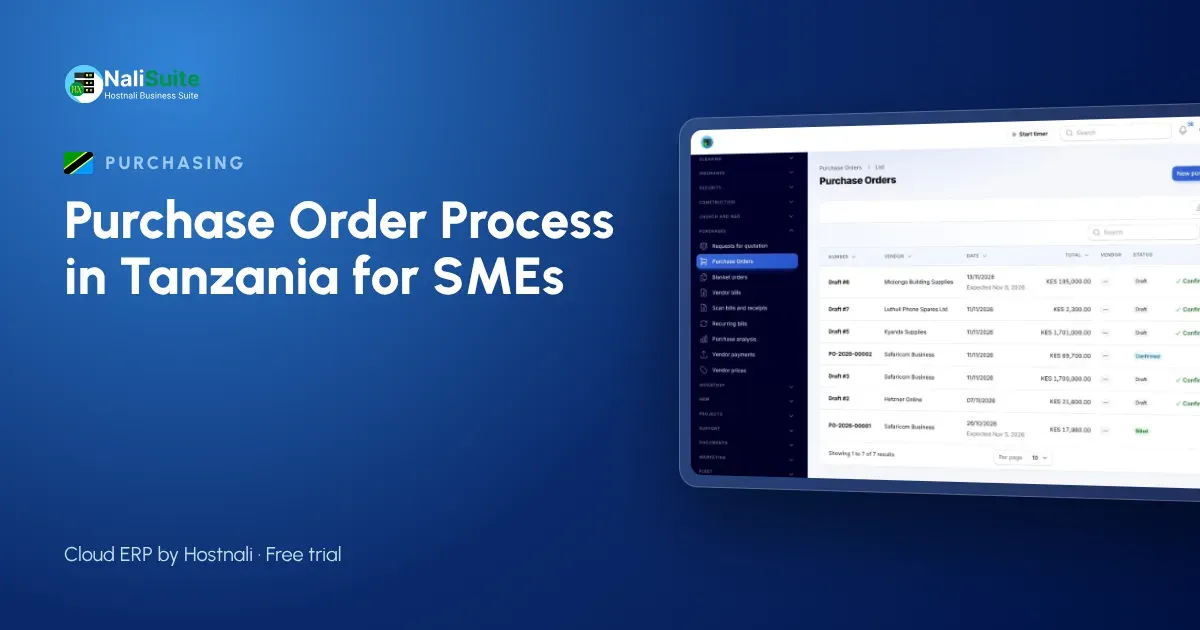
When the process lives in software, nothing depends on paper or memory. NaliSuite Purchases handles requests, approvals and POs; receiving updates inventory; and bills flow into accounting ready for payment.
Frequently asked questions
Can I pay suppliers by M-Pesa?
Yes. Many suppliers in Tanzania accept M-Pesa or Airtel Money as well as bank transfers. Record each payment against the matched bill.
What should I keep from each supplier?
Their EFD receipt or invoice showing their TIN, the items and any VAT, kept with the PO and the delivery record.
What is a goods received note?
A record of what actually arrived from the supplier, including any short or damaged items. It is one of the three documents you match before paying.
How long does it take to set up?
A small business can set up suppliers, approval limits and its first purchase orders in a day.
Try NaliSuite
Try NaliSuite free: purchase orders, stock and supplier bills in one place, from TZS 5,500 a month. Compare the plans.