 TZS
 KES - Kenya
 UGX - Uganda
 RWF - Rwanda
 NGN - Nigeria
 ZAR - South Africa
 USD - Zimbabwe
 GHS - Ghana
 ETB - Ethiopia
 ZMW - Zambia
 USD - International

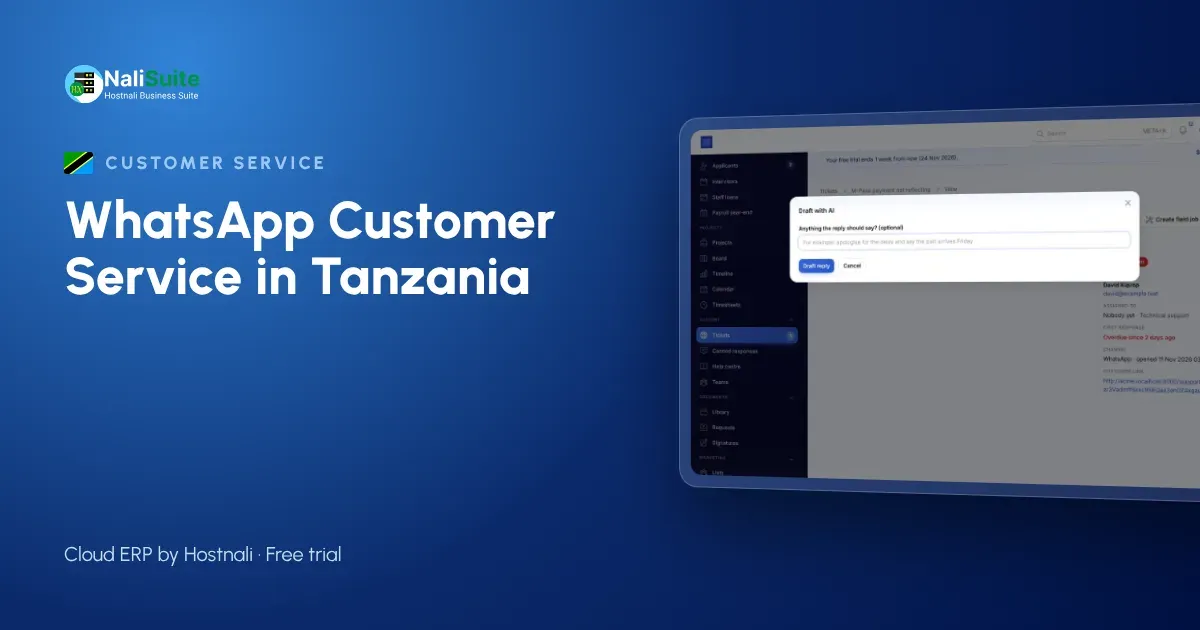
In Tanzania, customers message businesses on WhatsApp in Swahili and English, at any hour, and expect a quick answer. For a small team that shares one phone, the volume soon gets out of hand: messages are missed, the same question is answered twice, and nobody knows who promised what.
Start with the customer’s side of the chat
A customer in Dar es Salaam who messages you wants three things: a fast first reply, a correct answer and an easy way to buy. Everything else, the inbox, the tickets, the templates, exists to deliver those three.
Consider a hotel in Arusha that takes bookings from safari companies and walk-in guests. Tour operators send rooming lists on WhatsApp, guests ask about airport transfers, and the front desk shares one phone across three shifts. A booking confirmed on the night shift is forgotten by the morning team.
Decide who answers what
| Type of message | Who handles it | Target first reply |
|---|---|---|
| Price and stock questions | Sales team | 15 minutes |
| Orders and deliveries in Dodoma and Arusha | Shop or dispatch | 30 minutes |
| Payment questions | Accounts | Same day |
| Complaints | Manager | 1 hour |
The tools you need
- A business number on the WhatsApp Business Cloud API, so messages reach a shared inbox instead of one phone.
- Tickets with owners and service levels in NaliSuite Helpdesk, so every chat has someone responsible and late ones are flagged.
- Saved replies and AI drafts, so common answers are fast and consistent.
- Quotes, invoices and receipts that can be sent on WhatsApp, from Sales, Invoicing and the point of sale.
- Opt-in broadcasts from Marketing using approved templates.
Write your “who answers what” rules down, share them with the team and set assignment rules in the helpdesk so each chat lands with the right person, whether it comes from Mwanza or abroad.
Selling inside the chat
Many WhatsApp conversations are sales waiting to happen. A quotation sent from Sales can be accepted online, turned into an order and invoiced without retyping. The invoice from Invoicing carries a pay link, and the payment is matched to it when the money arrives. That is quicker for a customer in Mwanza than visiting the shop, and safer than accepting a screenshot.
For promotions, use approved templates in Marketing and send them only to customers who opted in.
How to tell if it is working
| Measure | What to look for |
|---|---|
| First reply time | Falling, and steady at weekends |
| Open tickets at closing time | Close to zero |
| Repeat questions | Turned into quick replies |
| Paid invoices sent by WhatsApp | A rising share of sales |
Read more on the WhatsApp feature page.
Mistakes that cost replies
- Answering from personal numbers. The customer saves the staff member’s number, and when that person leaves, so does the relationship. Keep every chat on the business number.
- No owner for evening messages. Messages that arrive after closing in Dar es Salaam should be assigned to someone for the first hour of the next day, not left for whoever opens WhatsApp first.
- Prices typed from memory. A price quoted in a chat should come from the same price list the till uses, or two customers in Dodoma will compare notes.
- Screenshots as proof of payment. Confirm M-Pesa and bank payments from your own records, not a picture, and let the invoice mark itself paid.
- Broadcasting to everyone. Promotions sent to people who never opted in get your number blocked or reported.
A day in a shared inbox
At 8am the overnight chats are already assigned: two orders for the Dar es Salaam shop, a delivery question for dispatch, a complaint for the manager. By 9am each has a first reply. At midday a customer in Arusha accepts a quotation online and pays the invoice from the same chat; the helpdesk shows it closed. In the afternoon a new staff member answers a returns question with a saved reply and gets it right first time. At closing, the open-ticket count is zero and nobody had to hand over a phone.
WhatsApp service in Tanzania: what to keep in mind
Tanzanian customers often switch between Swahili and English in the same chat. Saved quick replies in both languages help every staff member answer consistently. Invoices sent in the chat can carry a pay link for M-Pesa, Airtel Money, card or bank transfer, and receipts go back to the customer when the payment arrives.
Tanzanian businesses on the coast and in Zanzibar often serve tourists who message before they arrive and expect replies within the hour. Saved replies for transfers, check-in times and payment, in English and Swahili, let any receptionist answer correctly. Hotels and tour operators should also note group booking references on each ticket.
Frequently asked questions
Can we keep quick replies in Swahili and English?
Yes. Canned replies are plain text, so you can keep a Swahili and an English version of each and use whichever matches the customer.
Can guests pay by M-Pesa from a WhatsApp invoice?
Yes. The invoice pay link lets customers pay by M-Pesa, other mobile money, card or bank transfer, depending on your payment provider.
Do I need the WhatsApp Business API?
Yes, to share one number across a team you connect it through the official WhatsApp Business Cloud API. Our team can help a Tanzanian business set it up.
Can several staff answer at the same time?
Yes. Messages arrive as tickets in the helpdesk, so several people can answer different customers from one number, each with the full history.
Try NaliSuite
NaliSuite brings WhatsApp, helpdesk, sales, invoicing and mobile money into one cloud ERP, from TZS 5,500 a month. Start a free trial from the plans page and connect your business number.